

June 6, 2026
We have filed our twenty-first provisional patent. This latest addition to our portfolio focuses on re-entry and hypersonic vehicles, further strengthening our approach to potentially eliminating communication blackouts by addressing their underlying causes.
We are excited to have developed potential solutions to a challenge that has persisted for more than 60 years.
June 13, 2026
Project 180° North - FACF was busy teaching air how to behave between Mach .3 and Mach 5 when the universe, apparently unimpressed, slipped something far stranger onto the bench.
It turns out the universe hides its most disorienting discoveries inside the work you were already doing.
Some discoveries don't knock — they just show up! https://www.linkedin.com/pulse/north-brian-smith-hnzqc
June 24, 2026
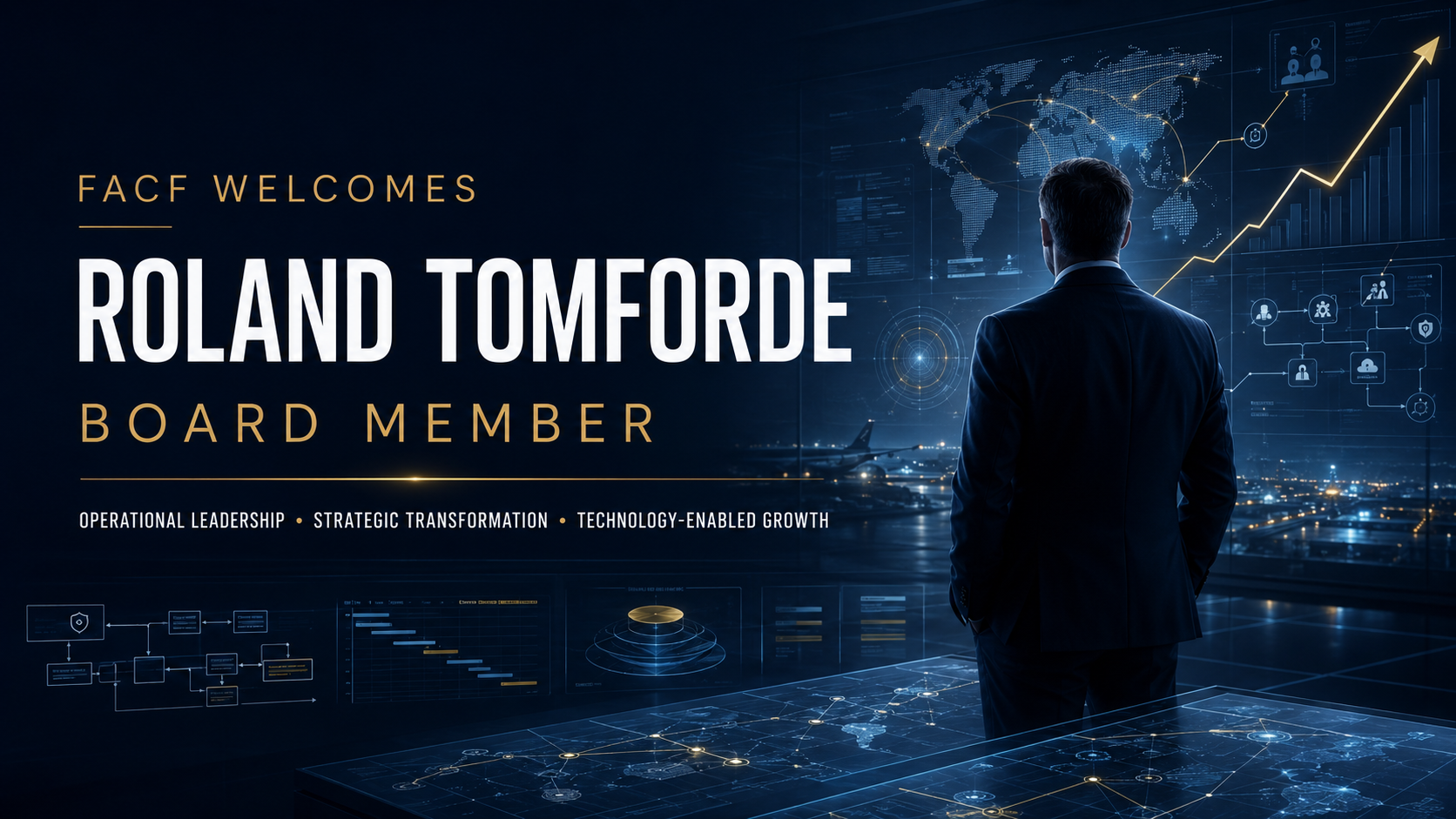
Roland Tomforde was recently selected to serve as a board member of FACF Technology Concepts, Inc. (FACF), bringing with him a long track record of operational leadership across complex, regulated, and technology-enabled financial services organizations. His appointment reflects a career built around stabilizing and transforming businesses operating within larger corporate structures, particularly during periods of growth, restructuring, and integration.
Roland is widely described as a transformative operational leader with strong judgment, restraint, and the ability to manage diverse, high-performing teams. His background spans senior executive roles where he has acted as both a change agent and a stabilizing force—balancing innovation and modernization with the demands of operational continuity. Across his career, he has consistently focused on improving efficiency, strengthening organizational alignment, and enabling scalable growth through better systems and processes.
Currently, he serves as President and previously Chief Operating Officer of Donlin, Recano & Company, Inc., an operating business within Equiniti, where he oversees all operational, financial, and technology functions. In that role, he led a significant multi-year transformation that modernized core infrastructure, digitized traditionally paper-heavy workflows, and improved both revenue and EBITDA performance while reducing headcount. Earlier in his career, he held senior leadership roles at Taylor Rafferty and D.F. King & Co., where he managed global investor relations and financial communications businesses, led mergers and acquisitions integration efforts, and drove rapid operational turnarounds.
His broader professional experience includes service as a commissioned officer in the United States Marine Corps, where he held leadership roles in logistics, intelligence, and combat operations. That foundation, combined with advanced academic training from Yale University and Columbia University’s School of International and Public Affairs, has shaped his approach to strategic planning, risk management, and organizational leadership. Across both public and private sector roles, Roland has developed deep expertise in operational integration, financial management, and technology-enabled transformation—skills that align closely with the strategic direction of FACF.
July 06, 2026
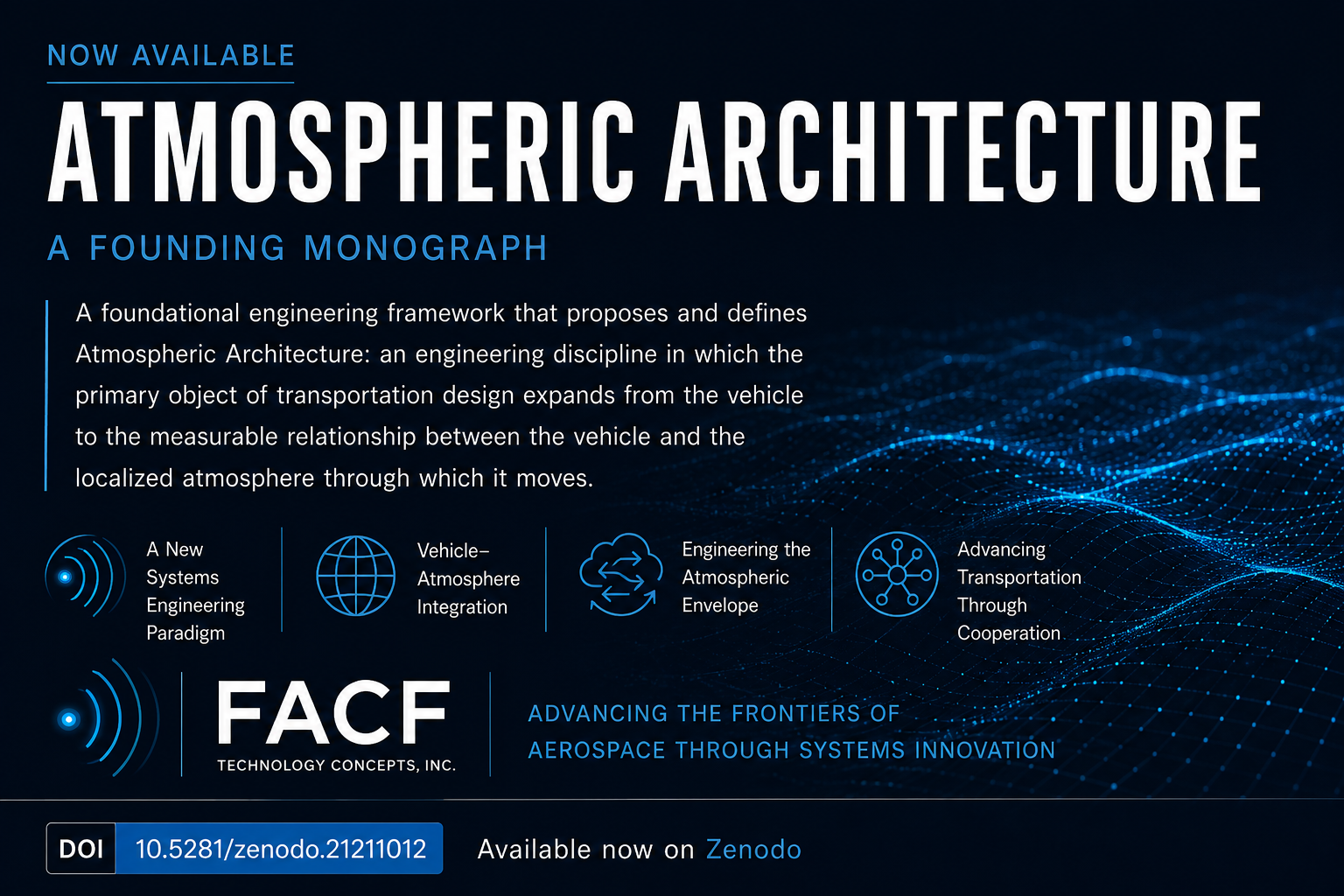
I’m excited to announce that today, we produced our first technical position paper, “Atmospheric Architecture: A Founding Monograph - Foundations of Relationship- Centered Transportation Engineering.” https://doi.org/10.5281/zenodo.21211012
Atmospheric Architecture is proposed as an engineering discipline in which the primary object of transportation design expands from the vehicle to the measurable relationship — the coupling — between a vehicle and the localized atmosphere through which it moves. It is presented as the founding, aerospace-specific instance of a broader design philosophy, Relationship Engineering. The monograph argues that aerospace engineering's century-long treatment of the atmosphere as an adversary to be endured is a historical convention rather than a physical necessity, and that the technical ingredients for treating the near-vehicle atmosphere as an engineerable element already exist in mature, peer-reviewed subfields — active flow control and plasma actuators, magneto- and plasma-aerodynamics, distributed "flight-by-feel" sensing, and active thermal protection — but remain unrecognized as facets of a single discipline.
July 13, 2026
Project 180° North -The thing we didn't have a word for…. https://www.linkedin.com/pulse/north-brian-smith-okaie
July 17, 2026
I’m excited to announce that today, we produced our second technical position paper, “Relationship Engineering” - Toward Relationships as Explicit Objects of Engineering Design. https://doi.org/10.5281/zenodo.21404020
This paper proposes Relationship Engineering: a candidate research direction in which measurable relationships are treated as explicit objects of engineering design, analysis, and optimization, alongside the components and systems that current practice already addresses so effectively. The proposal is offered as a complement to established disciplines — systems engineering, model-based systems engineering, network science, control theory, complexity science, and cybernetics — each of which already engages part of this territory, rather than as a replacement for any of them. We situate the proposal historically, review what the neighboring disciplines contribute, and ask whether a distinct layer of practice organized explicitly around the relationship as a unit of analysis would yield research and design leverage that the individual disciplines, pursued separately, do not.
August 2, 2026
Exciting progress at FACF Technology Concepts, Inc.!
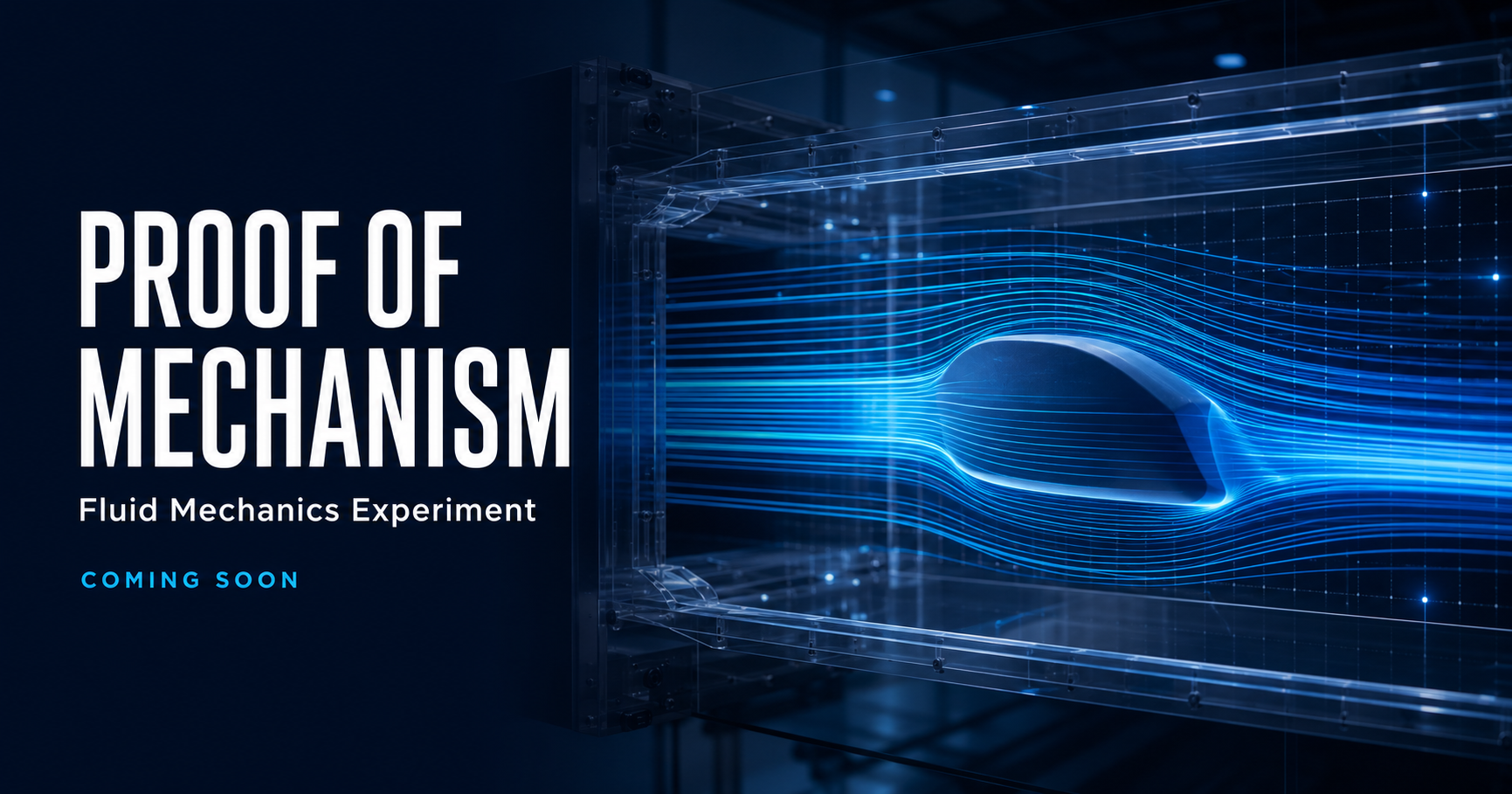
We have finalized the procedures for our upcoming Proof-of-Mechanism Fluid Mechanics Experiment—an important proof-of-concept milestone in the development of FACF’s innovative research.
The experiment will evaluate whether the proposed mechanism produces observable and repeatable effects under controlled conditions. Testing is expected to begin in the coming weeks, and we look forward to sharing updates as the work progresses.
Stay tuned!
August 4, 2026
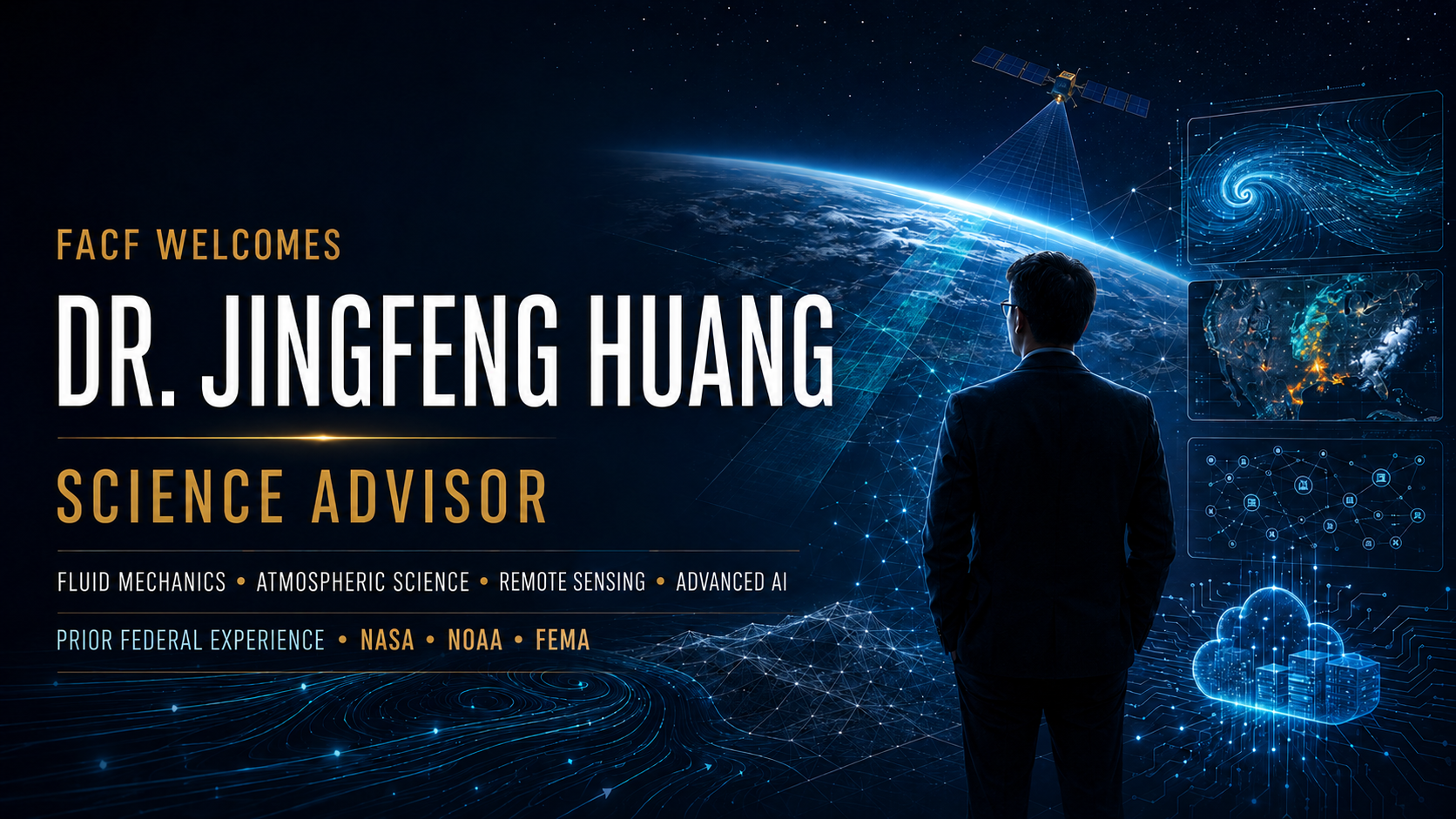
Jingfeng Huang, Ph.D. — Science Advisor
Dr. Jingfeng Huang was recently selected as an FACF Science Advisor. Dr. Huang is a multidisciplinary engineer and scientist with more than twenty years of experience spanning fluid mechanics, environmental engineering, atmospheric & space science, advanced artificial intelligence and data-systems architecture. He brings a rare combination of foundational engineering, federal scientific research, and modern AI engineering to complex technical problems.
Dr. Huang's engineering foundation is in fluid mechanics, hydraulics, and environmental systems, developed through graduate research that paired laboratory experimentation with numerical and computational modeling of complex fluid and environmental flows. Across his federal career supporting NASA, NOAA, and FEMA, he contributed to mission-critical scientific and operational programs in satellite remote sensing, atmospheric chemistry, radiative transfer, Earth observation, satellite instrumentation and calibration, and the monitoring of extreme and high-consequence events — transforming large-scale scientific observations into actionable intelligence.
He also leads the architecture and development of enterprise-scale artificial intelligence platforms, including large language model applications, agentic AI systems, knowledge-graph solutions, and intelligent search technologies, combining deep engineering knowledge with modern machine learning and cloud architecture.
Dr. Huang holds a Ph.D. in Satellite Remote Sensing from the University of Manchester, a Master of Philosophy in Environmental Hydraulics and Hydrology from the Hong Kong University of Science and Technology, and dual bachelor's degrees in Environmental Science and Engineering and Finance and Enterprise Management from Tsinghua University. At FACF Technology Concepts, he advises on atmospheric-interaction science, fluid and environmental modeling, remote sensing, and advanced data and AI methods supporting the company's research and development.
August 15, 2026
Project 180° North - We have been counting wrong… https://www.linkedin.com/pulse/we-have-been-counting-wrong-brian-smith-ntzve/?trackingId=N1OQWInlSfSdbX18v7deEA%3D%3D
August 18, 2026
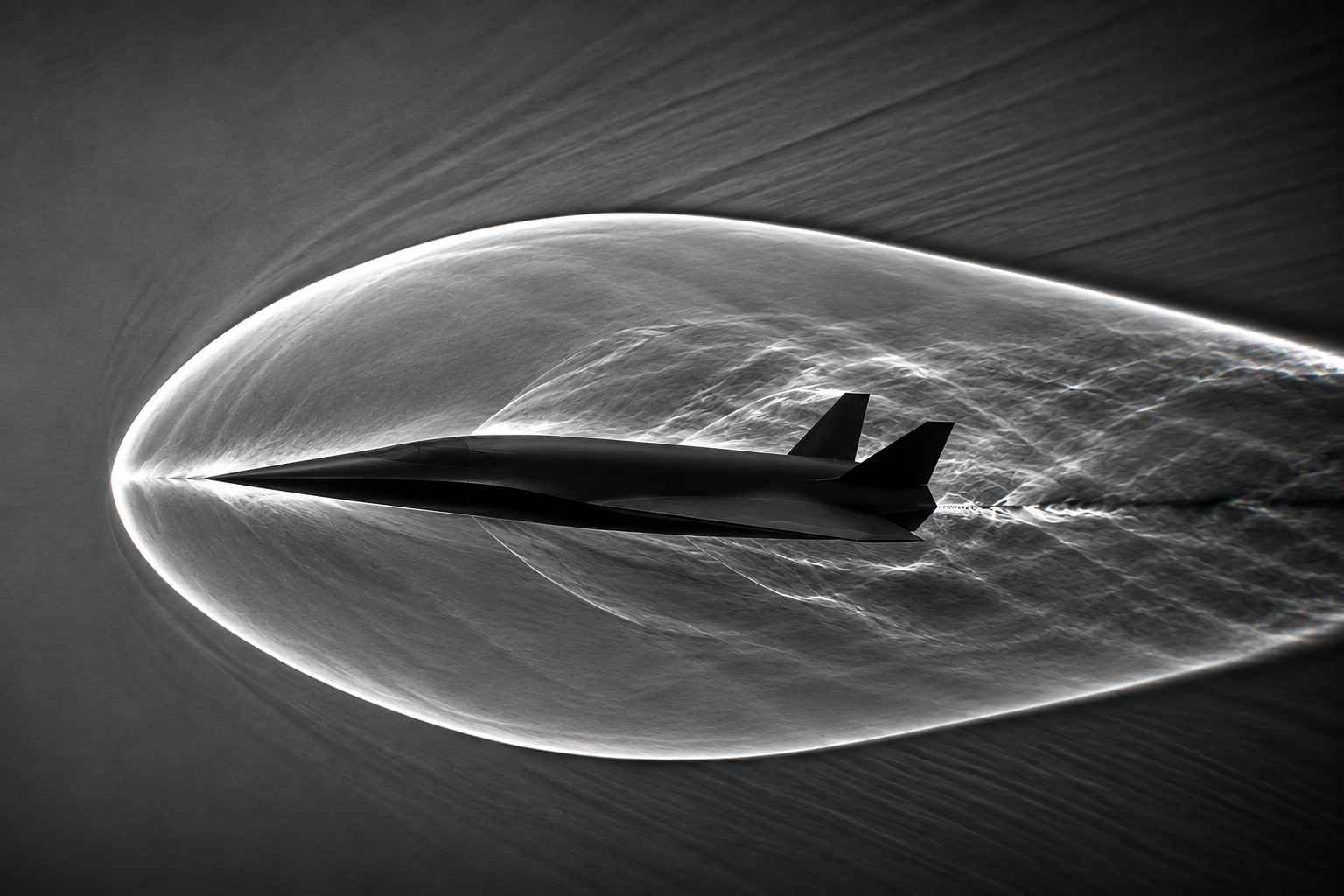
I’m excited to announce that today, we produced our third technical position paper, “Measurable Coupling” - Figures of Merit for Relationships Between Engineered Systems and their Environments. https://zenodo.org/records/21988272
This paper proposes that measurable relationships between engineered systems and the elements and environments with which they interact be treated as explicit objects of engineering design, and identified two results as the natural first tests of whether that proposal can be made rigorous: the well-posedness of a bounded relationship-quality index, and a defensible figure of merit relating the benefit of an engineered relationship to its cost. This paper takes up those two problems for a particular and consequential class of relationship — the coupling between an engineered system and the physical medium in which it operates. We first establish what the neighboring disciplines already provide, and identify precisely what they do not: a general, normalized, cost-aware figure of merit by which competing designs of a system–environment coupling can be compared. We then characterize such a coupling through four measurable attributes — observability, influenceability, strength, and cost — and state the conditions under which each is meaningful. On that basis we construct a bounded coupling-quality index and a benefit-per-cost figure of merit, establishing the normalization, weighting, sign, and accounting conditions under which each is well defined, and identifying the circumstances in which neither is. We illustrate the constructs against a single demonstration domain, the coupling between a vehicle and the atmosphere through which it moves, and close with the limitations of the present treatment and the questions it leaves open. The contribution is formal groundwork rather than empirical validation: the aim is to make coupling quality a quantity that can be stated, compared, and — in principle — falsified.
August 24, 2026
Today, I stress-tested one of my own patent claims — and it "failed." Good. It was a test designed to prove my own idea wrong.
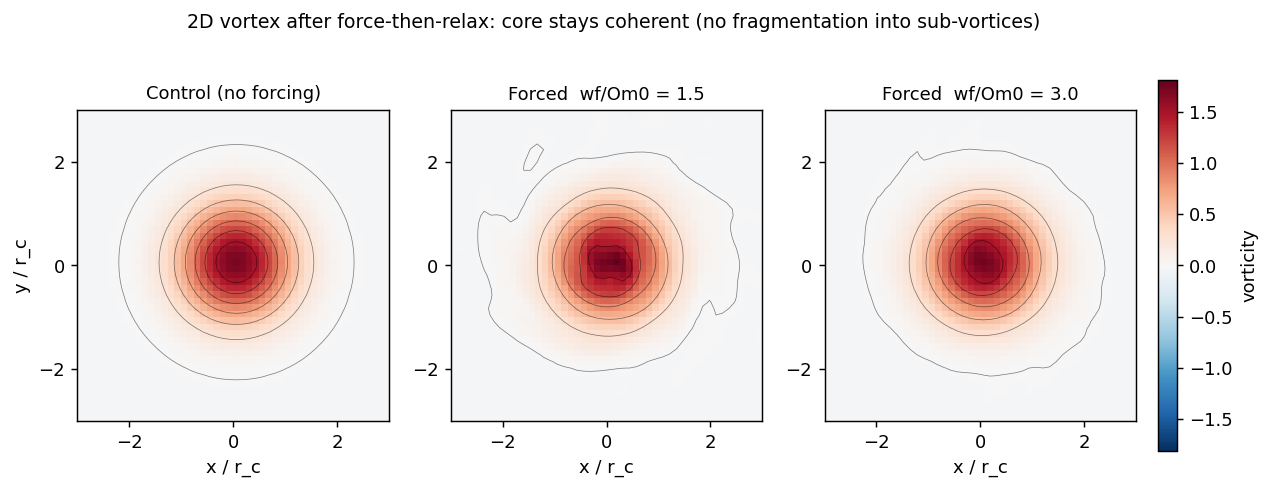
I'm developing a way to break up the vortices that trail off aircraft wingtips — the ones that waste fuel and force planes to space themselves miles apart. Before spending a dollar on hardware or a collaborator's compute time, I built an independent simulation to check the core assumption: does the forcing actually disrupt the vortex?
It didn't. Clean negative. The vortex shrugged it off and stayed perfectly coherent (image left).
Here's why I'm smiling: that's the correct result. The disruption I'm after is fundamentally a 3D phenomenon, and this was a 2D test — so a negative is exactly what the physics predicts. It tells me precisely where the real test has to happen, and I learned it in an afternoon instead of six months into a build.
Test your assumptions before they cost you!
September 4, 2026
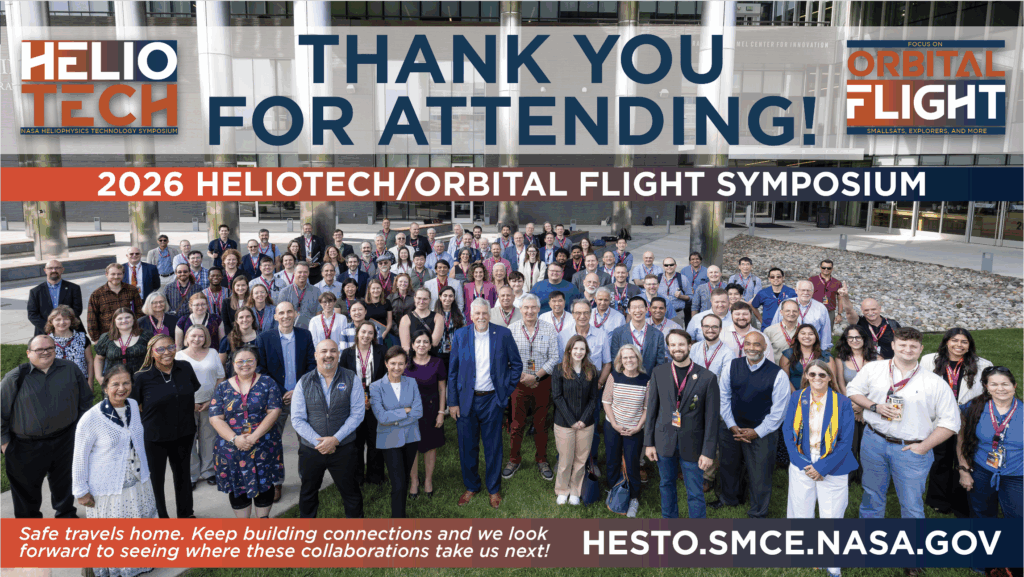
During the week of August 31, 2026, we attended the fourth annual HELIOTECH Symposium, held in partnership with NASA Orbital Flight and hosted by the Johns Hopkins University Applied Physics Laboratory (APL) in Laurel, Maryland. The Heliophysics Technology Symposium was designed to foster collaboration among technologists, scientists, and mission principal investigators across the heliophysics community.
Although HELIOTECH is focused on heliophysics rather than hypersonics, we identified a compelling strategic and technical rationale for attending. Our participation provided an opportunity to establish new relationships across the NASA and broader research community while gaining technical insights relevant to three of our technology areas. In particular, we sought to identify potential partners, explore areas of cross-disciplinary application, and assess whether advances within the heliophysics community could inform or accelerate aspects of our ongoing technology development efforts.
September 10, 2026
Follow-up to my last post on breaking up wingtip vortices — We ran the 3D simulation, and the honest result is: one big yes & one open question.
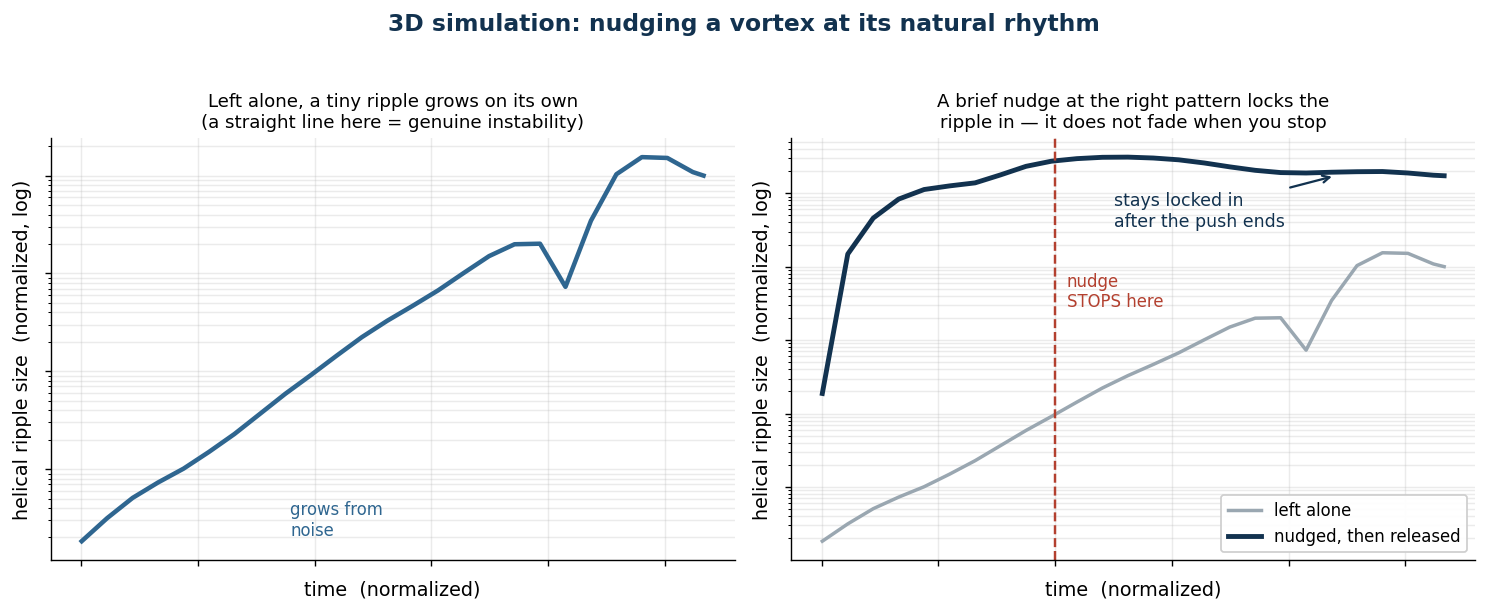
The yes: a wingtip vortex is not as stable as it looks. Starting from nothing, but numerical noise, a tiny helical ripple grew on its own, steadily, all by itself. On a log plot that shows up as a straight line — the fingerprint of a genuine instability. Two completely different methods now agree it's real.
The better yes: We gave the vortex a brief nudge at the pattern it naturally wants to wobble in — then switched the nudge off entirely. It didn't fade. The ripple stayed locked in, far above where it would have been on its own.
That matters more than it sounds. It's the difference between having to shove something continuously and just tipping it over. You're not fighting the vortex — you're giving it a small push in the direction it already wanted to fall.
The open question: growth is not the same as break-up. The ripple grew and locked in, but at the scale I could run, the vortex core stayed a single coherent structure — deformed, not shattered. Whether that becomes a genuine break-up at realistic flight conditions is exactly what the next, much bigger test has to answer.
We could have posted the encouraging half and stopped there. But an unverified claim is a liability, not an asset — especially in this field. So: promising mechanism, real instability, with question still open.